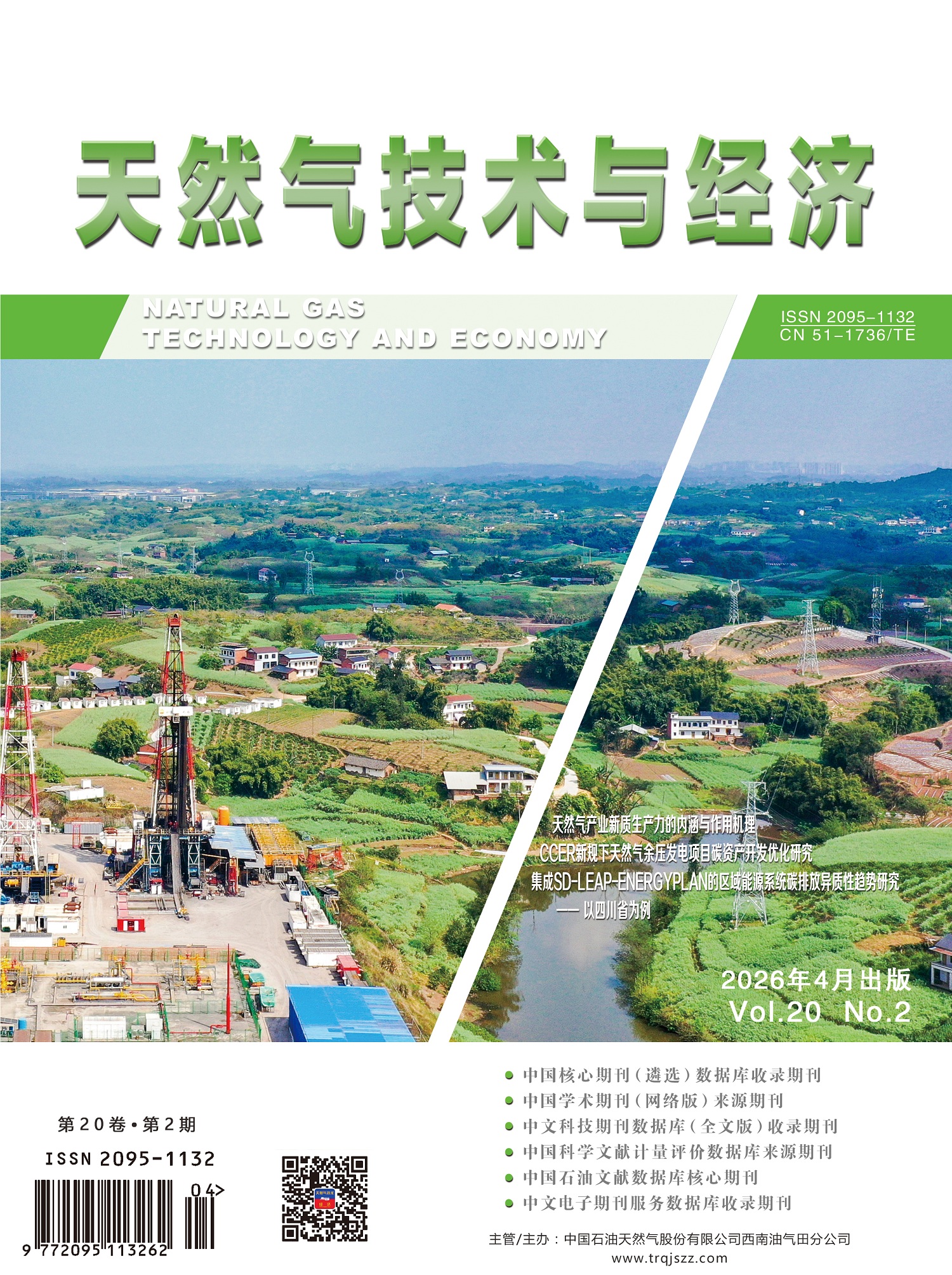
As the nature in building a contemporary natural-gas industrial system and promoting this industrial development in high quality, to develop new quality productive forces in the natural-gas industry according to local conditions plays exemplary and driving roles to encourage the upgrading of traditional industry, cultivate the strategic emerging industry, and achieve the transformation of modern industrial management. Thus, both intension and function mechanisms on the forces were thoroughly discussed from aspects of dynamical system, industrial scenarios, and critical paths. Results show that (i) the new productive forces in the natural gas industry are formed and developed through the combination and collaborative upgrading of new elements such as new types of workers, new types of labor tools, and new types of labor objects. They exhibit four major characteristics: strong innovation, high efficiency, excellent greenness, and strong digital intelligence; (ii) the dynamical system to expand these forces covers application innovation of technological R & D, innovative allocation of production factors, transformation and upgrading of green digital intelligence, and creation of new production relations; (iii) industrial scenarios propelled by the forces are composed of traditional, emerging, and future natural-gas industrial scenarios; and (iv) critical paths to facilitate force growth include efficiency revolution driven by technological innovation, digital transformation and intelligent operation, green and low-carbon transformation in traditional industry, innovation in both institutional mechanisms and business models, and upgrading in human capital and industrial ecology. In conclusion, fully leveraging the role of new quality productive forces in the natural-gas industry based on actual industrial expansion can provide vigorous assistance for developing new quality productive forces in energy industry in line with local conditions and advancing the construction of modern energy system.
Natural-gas reservoir-forming conditions in Xujiahe Formation were systematically discussed from aspects of sedimentary reservoirs and preservation in an effort to figure out exploration potential of oil and gas in the fourth member of the Upper Triassic Xujiahe Formation (Xujiahe 4 Member) in Nanjiang area, northern Sichuan Basin. Results show that (i) braided river deltaic plain deposition, which is developed in Xujiahe 4 Member in this area, is characterized by sufficient source and well-developed conglomerate. Among which the braided channel microfacies of deltaic plain can be subdivided into conglomerate braided channel and (conglomeratic) sandstone braided channel, with the latter as the favorable facies belt for reservoir extension; (ii) based on drilling and outcrop data, the planar distribution of sedimentary facies is identified for Xujiahe 4 Member, and the depositional pattern of braided channel of braided river delta plain is also established; (iii) reservoir-forming conditions indicate that natural gas in Xujiahe 4 Member in Nanjiang area is of mixed origin developed with Xujiahe Formation and Permian as source rocks, and is featured by "proximal vertical migration, and distal fracture communication"; and (iv) sealed by tight conglomerates at the updip direction of monoclinal structure, favorable preservation conditions are conducive to forming "facies-controlled" lithologic reservoirs developed with the reservoir-forming pattern of "mixed source charging, lithofacies-controlling reservoir, and source- or reservoir-controlling accumulation". These above findings may provide reference and guidance for oil and gas exploration in tight sandstone in foothill belts of northern Sichuan Basin.
Both Silurian Longmaxi Formation and Cambrian Qiongzhusi Formation in Sichuan Basin were taken as objectives to contrast their reservoir quality and fracability characteristics by means of geological parameter analysis, engineering testing and numerical simulation in order to identify the main influential factors on the productivity difference of shale gas in these two formations. Results show that (i) from the perspective of reservoir quality, Qiongzhusi Formation is greatly better than Longmaxi Formation. Type I reservoir in Qiongzhusi Formation is 131.8 m thick on average, in which macropores and mesopores are conducted as the main pore structure with peak pore diameter ranging from 30 nm to 100 nm. And permeability is better, with DFIT permeability about 10 times that in Longmaxi Formation. By contrast, type I reservoir in Longmaxi Formation is only 10-18 m thick, in which micropores and mesopores are deemed as the main pore structure with peak pore diameter in the range of 2-20 nm. And its seepage capacity is poor; (ii) in term of fracture propagation, Qiongzhusi Formation represents uniform stress distribution with small horizontal stress difference, exhibiting a balanced 3D propagation pattern with regular morphology of fracture network and sufficient vertical propagation. Influenced by stress barriers and natural fractures, however, Longmaxi Formation exhibits an unbalanced propagation pattern, complex morphology of fracture network, and poor fracture height extension; and (iii) from the perspective of productivity prediction, due to some difference in decisive geological parameters such as reservoir thickness, pore structure, permeability and fracture propagation pattern, Longmaxi Formation shows stable but inferior productivity, while Qiongzhusi Formation has higher productivity potentiality for development breakthrough. In conclusion, Qiongzhusi Formation outperforms Longmaxi Formation in reservoir quality, fracture propagation pattern and productivity potentiality. The study reveals the main influential factors on the productivity difference of shale gas in both Longmaxi and Qiongzhusi Formations, and provides technical assistance for the exploration deployment and efficient development of shale gas in Qiongzhusi Formation.
Reservoirs of the Lower Shihezi Formation, Fuxian block, Ordos Basin, are classical tight sandstone reservoirs. Taken cores from the first member of Lower Shihezi Formation (Shihezi 1 Member) as examples, reservoir characteristics were thoroughly discussed by means of whole rock analysis, scanning electron microscope (SEM) and nuclear magnetic resonance (NMR) in an effort to ascertain influential factors on reservoir damage. Then, damage degree of both water and velocity sensitivity was analyzed through core experiments. Water-lock damage mechanisms were studied by virtue of NMR technology. Additionally, another damage degree of different fracturing-fluid system to pore throat was evaluated. Results show that (i) in this block, clay mineral in quartz sandstone reservoirs of Shihezi 1 Member is dominated by illite, chlorite and mixed illite/smectite. And with thin pore throat as the soul, the reservoirs are overall relatively tight; (ii) with weak water sensitivity and moderate-to-weak velocity sensitivity, Shihezi 2 reservoirs suffer a certain degree of water-lock damage because the liquid retained in small pores can be hardly flown back. Their liquid-phase permeability can be recovered partially after adding water-lock removal agent; and (iii) for two sorts of fracturing-fluid system commonly used in this study area, both guar gum and integrated emulsifier have lower damage degree. The liquid-phase retention is still the main factor bringing about this damage. To sum up, fracturing should be attached importance to the mitigation of water-lock damage in order for optimizing fracturing-fluid formula. It is recommended to add cleanup additive and water-lock removal agent to reduce liquid-phase retention and enhance flowback efficiency, so as to make reservoir protection in high effect. The findings may provide guidance for later selection of fracturing-fluid formula in this block.
During drilling deep coalbed methane (CBM), there is a difficult problem of wellbore instability in coal rocks owing to their evident structural heterogeneity and anisotropy. Therefore, both fabric characteristics and mechanical failure mechanisms were systematically investigated for such rocks by means of macroscopic geological characterization, microscopic fabrics analysis and indoor triaxial rock mechanical test in order to provide theoretical basis for safe drilling in deep CBM reservoirs. Results show that (i) coal rocks in the study area are mainly dull to semi-dull, microscopically developed with a large number of irregular pores and schistosity fractures. They are rich in quartz with water absorption sensitivity of clay mineral. This kind of porous media constitutes mechanically weak plane; (ii) triaxial compression test illustrates that confining pressure may evidently confine or enhance the coal-rock intensity, failure mechanisms transform to shearing from tensioning along with increasing confining pressure. And the fracture initiation, propagation and penetration are the main factors on macroscopic wellbore instability; and (iii) actual geostress test reveals that the study area lies in the strike-slip fault system. The difference of tectonic stress which increases with burial depth leads to intensive stress concentration, and the preferential seepage of drilling fluid along fractures triggers the accumulation of pore pressure. The effective stress in coal rocks is reduced through seepage-stress coupling mechanisms. In conclusion, the instability in such rocks results from the joint action of geostress setting, weak plane structure, and drilling-fluid seepage for pressure transmission. With strong sealing capacity to cut off liquid invasion and enhance wellbore bracing in effect, such drilling-fluid system is crucial to maintain wellbore stability in complex structure belts.
For unconventional gas reservoirs in China, their development is confronted with challenges, like complex geological conditions, low production in single well, and high completion cost. Therefore, synchronous fracturing technologies in North America were systematically sorted out from aspects of evolutionary process, core principles, key equipment and economic evaluation models. Especially, their growth pathway from "zipper fracturing" to "cross-platform remote multi-well synchronous fracturing" was analyzed, covering intrinsic mechanisms on improving both recovery and operation efficiency in unconventional gas. Furthermore, based on geological engineering characteristics of shale gas and tight gas reservoirs in Sichuan Basin, some comparative analysis was conducted in terms of technical adaptability and economic feasibility. Results show that (i) synchronous fracturing technologies perform well in raising recovery efficiency in single well, reducing completion cost and shortening commissioning cycle; and (ii) for synchronous fracturing, its success is greatly dependent on fine evaluation on geological conditions, collaboration of engineering process, and innovation in management mode. It is proposed to choose some favorable blocks including southern and western Sichuan Basin as pilot areas, adopt progressive strategy of "pilot test, integrated tackling key problems, and iteration", and gradually construct an intelligent system of factory-like fracturing technologies suitable for local geological and market conditions. These proposals may provide technical help for enhancing China's unconventional gas reservoirs in beneficial development.
Taken the Upper Paleozoic reservoirs in Daniudi gasfield, Ordos Basin, as examples, both reservoir characteristics and well-logging errors were analyzed to raise the producing efficiency of remaining reserves in tight sandstone gas reservoirs with low porosity and extra low permeability in this field and address two problems of low efficiency and long potential investigation cycle in adopting traditional perforation-adding methods in numerous wells. It is indicated that traditional methods can not tell “hidden” unproduced reserves in superimposed reservoirs with multiple sandbody accurately. A model of reservoir parameters was set up after secondary logging interpretation, further to select latent layers, and to guide layer and well selection for perforation-adding fracturing. Results show that (i) the standard scheme of logging curves is built for three grades of standard layers (i.e., limestone in Ma 5 Member, limestone in Taiyuan Formation, and limestone in Shanxi Formation), which combines histogram analysis with trend surface correction, and eliminates systematic errors in logging data; (ii) calculated from multiple statistic methods, this parameter model is accordant with characteristics in tight sandstone gas reservoirs; and (iii) the introduced static reservoir quality index (RQI) and productivity interference coefficient (PIC) may assess the perforation-adding potentiality rapidly. RQI≥0.4 and PIC≥0.6 just mean that the well has such potentiality. Based on this, 10 wells are selected for adding perforation, and the adding efficiency is up to 100%. In conclusion, the setup parameter model is superior to traditional methods, and can effectively improve the accuracy to select perforation-adding layers. In addition, both static and dynamic evaluation based on RQI and PIC can fast identify some wells with perforaton-adding potentiality, and thus optimize them, and well and layer selection schemes.
There are prominent problems to regulate natural-gas pipeline network while accelerating the digital transformation of energy industry, including insufficient data integration, single analysis dimension, and low dynamic response efficiency. Therefore, taken Guangdong Pipeline Network Regulation Center as an objective, its present situation, core demand and some existing technical bottlenecks in this regulation were discussed in an effort to solve above problems and to further promote the digital and intelligent upgrading of provincial pipeline regulation. Then, drawbacks were pointed out for traditional regulation modes, like manual analysis dependence, fragmented data, and lagged response. Finally, both necessity and urgency to establish the technological system of visual regulation were put forward on the basis of real-time data acquisition and integration of multiple technologies. Results show that (i) covering the entire business chain of Guangdong natural-gas pipelines, a platform of FINE BI visual regulation has been successfully constructed by taking the PipeChina Production and Operation Management System (PPS) as the data hub, relying on the real-time data acquisition capability of the SCADA system at the millisecond level, and integrating SQL data query direct connect database and Python data processing method through the technology of direct sourcing and end-to-end integration of both SCADA and PPS database. This platform has core modules of pipeline pressure distribution, upstream and downstream flow balance analysis, dynamic topology flow chart, and internal transfer path optimization. And it is embedded with several functions like data linked acquisition, intelligent abnormal data warning and historical trend analysis. Visually and comprehensively, the platform displays overall operation of Guangdong gas pipelines through visual component, such as word cloud, flow graph and waterfall chart; and (ii) this visual regulation can achieve real-time visualization and intelligent analysis of production and operation data, and construct a global data model containing 28 parameters such as pressure, flow rate, energy consumption, water dewpoint and gas composition, and so on. Compared with traditional manual analysis mode, it has the control decision judgment and response time about 40% shorter, and the abnormal data recognition and discovery rate up to 98% in real application. It can actively improve regulating efficiency and accuracy, and provide a complete digital transformation form of “visual data-controllable process-intelligent analysis-decision support” for provincial pipeline regulation center. In conclusion, the visual technology based on SCADA real-time data acquisition and multi-technology integration can effectively solve core problems in gas pipeline regulation such as fragmented data, single analysis and lagged response, improve the intelligence level and decision-making efficiency, and also has engineering practicality.
In order to make natural-gas residual pressure power generation projects in line with China Certified Emission Reduction (CCER) new regulations and improve development benefits of carbon assets, the regulations' core concept and market trend were explained. Methodological design and development strategies were investigated. And a methodological optimization scheme was proposed, which includes scenario adaptation of application conditions, additional standardized demonstration, and baseline classified accounting. Furthermore, an implementation pathway integrated "screening-compliance-risk control" was taken shape. Results show that (i) CCER new regulations reconstruct the mechanism positioning and optimize the management system, emphasizing the balance between methodological rigorousness and enforceability; (ii) the methodological optimization should concentrate on defining the application conditions of mature scenarios such as purification plants or branch line, introduce the parameter of gas transmission non-uniformity coefficient to enhance the objectivity of additional demonstration, and select baseline emission factors based on classification to comply with the principle of conservatism; and (iii) as for one project, the opening of carbon assets needs life-cycle compliance control and data network to reduce its risks. The proposed optimization scheme can provide technical support for the efficient development of carbon assets in natural-gas residual pressure power generation projects.
It is essential to accurately ascertain the key areas and evolution trend of carbon emission in regional energy system in order to achieve deep decarbonization. Thus, on the basis of three major units (fuel combustion, system spillage, and regional power trading), a carbon emission inventory of Sichuan Province energy system was set up, and the key carbon emission source was identified. Then, the differentiated evolution trend of carbon emission in this regional system under conservative, baseline, and blueprint scenarios was analyzed by virtue of the system dynamics (SD)-LEAP-EnergyPLAN integrated model. Results show that (i) the NSW sub-scenario misses the time window of industrial transformation, confines the possibility to achieve green growth through technological innovation and structural optimization; (ii) the NSM sub-scenario reflects the realistic choice of balanced game between "Development is the fundamental principle" and "Lucid waters and lush mountains are invaluable assets", but may aggravate the "middle-income trap"; (iii) the NSS sub-scenario is a high-speed and extensive development model, which involves exchanging environmental capacity for capital and technology; (iv) the JSW sub-scenario is essentially compromising regional economic and social development for energy conservation and carbon reduction; (v) the JSM sub-scenario embodies that the traditional development mode will lead to dependence on high carbon path and delayed peak if only based on natural growth inertia; (vi) the JSS sub-scenario represents that high carbon path can not be reversed solely through the regulation of the system itself when external constraint and market mechanisms in failure; (vii) the TCSW sub-scenario presents a mature form of "post carbon society", mainly occurring in the middle and late development stage of developed countries; (viii) the TCSM sub-scenario achieves deep emission reduction while maintaining reasonable growth, which is the optimal reference path to deal with "energy trilemma"; and (ix) the TCSS sub-scenario highlights that the transformation must focus on adaptability of technological emission reduction to the carrying capacity of resources and environment.
It is proposed in China strategy to accelerate the creation of world-class, specialized, refined, differential and innovative demonstration enterprises. Thus, the pathway was explored deeply to create oil and gasfield companies to first-class technological innovation-oriented enterprises, so as to provide strong support for petroleum industry in high-quality development, transformation and upgrading, providing service for the national energy security and dual-carbon strategy, and the construction of world-class enterprises. Results show that (i) as a multidimensional concept, the first-class innovation-oriented enterprise involves leadership, relativity, diversity, personalization, sustainability and development; and (ii) this creation cannot be accomplished at one stroke, but should be promoted gradually and steadily through three phase objectives of "basic creation, creation, and full creation of world-class technological innovation-oriented enterprise". The implementation pathway and measure to promote this creation are also proposed as follows: to create first-class technological innovation-oriented consortium of oil and gasfield companies guided by market-oriented reforms, to cultivate talent team with strong skill, loyalty and responsibility guided by market-oriented incentives, and to accelerate the construction of third-party technology value evaluation system guided by market-oriented allocation.




 Abstract
 Download PDF